
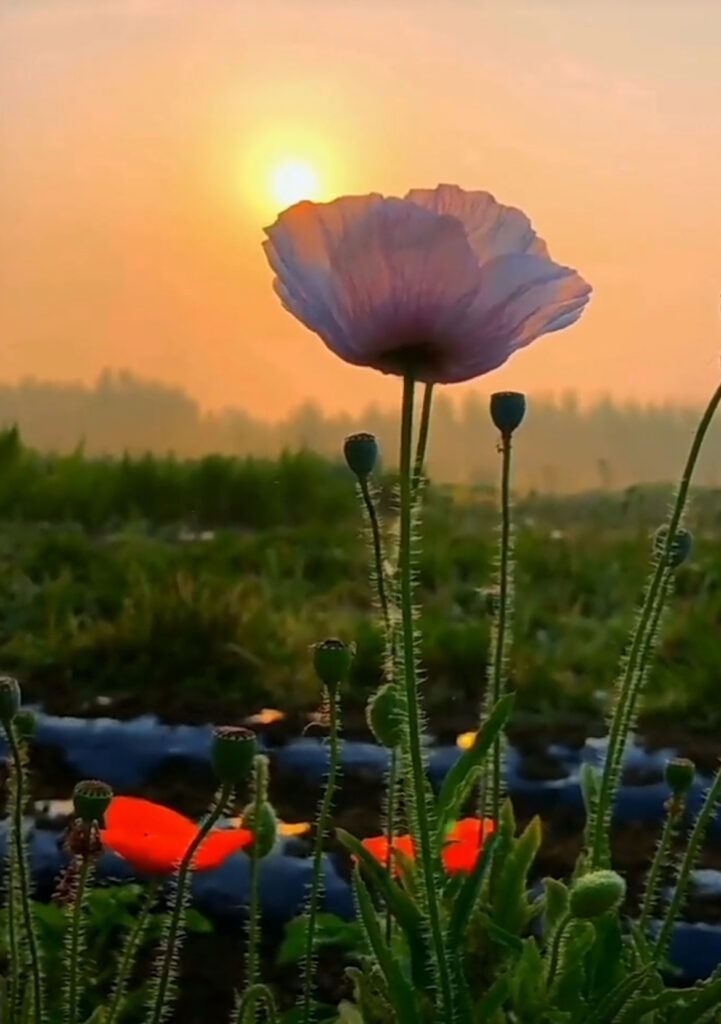
— Every ending closes one chapter of life, but it also creates space for another to begin.
❤️ The Pain We Never Choose
Human beings naturally resist loss. We spend much of our lives trying to preserve what we love—our relationships, health, careers, identities, and dreams. Loss feels like the antithesis of progress. It disrupts our plans, shatters our assumptions, and leaves us with questions no simple answer can satisfy.
Yet throughout history, psychology, literature, and faith all point to a remarkable paradox: although loss is never desirable, it often becomes the doorway through which our deepest transformation begins.
This does not mean loss is good. It means loss changes us in ways comfort rarely can.
🙏 When Our World Falls Apart
Psychologists have long observed that our identities are built on what is familiar. We become attached not only to people and possessions but also to routines, expectations, and the stories we tell ourselves about who we are. These attachments provide stability, but they also create invisible boundaries. As long as life remains predictable, we have little reason to look beyond the surface.
Loss disrupts that certainty.
A career ends. A marriage ends. A diagnosis alters the future. A loved one dies. Suddenly, the identity we carefully built no longer fits our lives.
This disruption is profoundly painful because it produces what psychologists call disorientation. The old self no longer works, yet the new self has not yet emerged. We stand in the uncomfortable space between who we were and who we are becoming.
It is here, surprisingly, that possibility begins.
🥲 The Hidden Work of Brokenness
The Japanese art of kintsugi repairs broken pottery with gold rather than hiding the cracks. The fractures are not erased; they become part of the object’s beauty. People often develop in much the same way. We rarely become wiser through uninterrupted success. We become wiser when life breaks our illusions and forces us to discover strengths we never knew we had.
Comfort preserves us.
Loss reshapes us.
Neuroscience offers another fascinating perspective. Our brains naturally seek efficiency, forming habits, routines, and predictable patterns that conserve energy. While these patterns help us function, they can also trap us in repetitive ways of thinking. A significant loss disrupts those neurological routines. The brain is suddenly forced to forge new pathways, adapt to new realities, and rethink long-held assumptions.
In other words, a crisis often marks the beginning of cognitive renewal.
Researchers call this post-traumatic growth. It does not suggest that trauma is beneficial. Rather, it recognizes that some individuals emerge with greater compassion, deeper relationships, stronger faith, clearer priorities, and a renewed appreciation for life.
Growth is not the opposite of pain.
Growth often stems from pain.
🌍 A Pattern Woven into Creation
Spiritually, the pattern recurs.
Seeds must sink beneath the soil before new life emerges.
Winter must yield before spring arrives.
The caterpillar must shed its former body before becoming a butterfly.
Jesus Himself described this mystery when He said that a grain of wheat must fall into the ground and die before it bears much fruit (John 12:24). In His teaching, death was not the final chapter but the hidden beginning of multiplication.
Nature has understood this long before we did.
Forests often regenerate after a fire. Certain pinecones release their seeds only when exposed to intense heat. Muscles become stronger only after tiny muscle fibers are torn during exercise. Even the stars that produce many of the elements in our bodies were born in cosmic explosions billions of years ago.
Creation itself seems to whisper the same truth.
Sometimes what appears to be destruction is creating the conditions for new life.
🤔 The Choice Every Loss Presents
Yet there is an important caveat.
Not everyone who experiences loss grows stronger.
Some become bitter.
Some become hopeless.
Some spend years trying to recover a life that no longer exists.
The difference is not the magnitude of the loss. It often lies in what we choose to do with it.
Loss poses a question to every human heart:
“Will this suffering mark the end of my story, or will it mark the beginning of another?”
That question cannot be answered overnight. Grief has its own timetable, and healing cannot be forced. There are seasons when simply surviving is enough.
But eventually, almost imperceptibly, another question arises.
“What now?”
That simple question marks the first step toward hope.
👉 The Doors We Never Expected
New opportunities rarely arrive dressed as such.
They often arrive disguised as necessities.
The widow discovers a purpose she never imagined.
The unemployed worker begins a career that eventually fulfills him.
The patient develops compassion that is impossible to learn from textbooks.
The lonely soul becomes the friend others desperately need.
Looking back, these turning points seem almost inevitable.
While living through them, they felt impossible.
Perhaps this is why hindsight so often reveals a hidden architecture in our lives. The doors we desperately tried to keep open were not always the ones that led where we ultimately needed to go.
📌 When God Redeems What We Lost
This does not erase grief.
It simply reminds us that grief does not have the last word.
There is a profound difference between believing that everything happens for a reason and believing that God can bring purpose to every circumstance.
The first risk is minimizing suffering.
The second honors suffering while refusing to let it be meaningless.
Loss changes us by stripping away the illusion that life is under our control. In that vulnerable space, we become more teachable, more compassionate, more dependent on others, and often more open to God than we have ever been.
Perhaps that is the deepest opportunity hidden within loss.
Not merely a new career.
Not merely a new relationship.
Not merely a new direction.
But a new person.
The old life may never return. Some losses remain permanent this side of eternity.
Yet the human heart possesses an extraordinary capacity to grow around its wounds. Like a tree whose trunk bears the scar of an old storm, it continues to reach toward the light.
The scar remains.
But so does life.
And sometimes, the very place that was once broken becomes the place where the greatest fruit begins to grow.