
……..The Wisdom of Smallness
👉 Standing Before Immensity
There are places on Earth so vast that language fails to describe them. The Grand Canyon in Arizona is one such place.
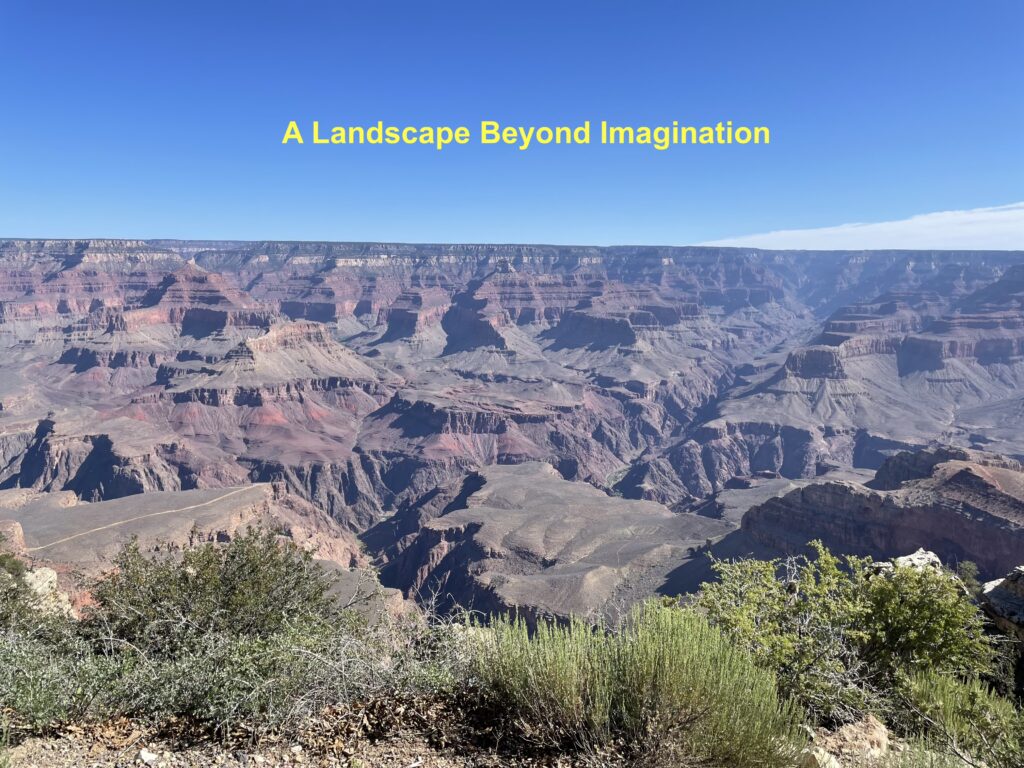
Photographs cannot prepare a visitor for the first glimpse. One approaches the rim expecting a magnificent landscape, only to discover something far greater: a chasm so immense that the mind struggles to grasp its scale. Layer upon layer of rock extends to the horizon. Colors shift with each passing cloud. Distances deceive the eye. What seems a short walk across a ridge may be miles away.
The Grand Canyon is more than a destination. It is an encounter with the immensity.
For a moment, human concerns seem to dissolve. Deadlines, arguments, ambitions, possessions—all seem strangely insignificant against the backdrop of a landscape that existed long before us and will likely endure long after we are gone.
🤔 The Mystery of Origins
Scientists explain that the canyon was carved by the Colorado River over millions of years. Geological evidence supports this view, and generations of researchers have devoted their lives to uncovering its history.
Yet even after hearing every scientific explanation, I still walk away with a lingering sense of mystery.
How can a river carve something so vast? How can layers of stone preserve a story older than human civilization? How can a place feel both ancient and alive?
Science may describe the process, but it does not diminish wonder.
Perhaps that is why many people, standing at the rim, instinctively look beyond explanations. They see not merely erosion and geology but creation itself. Whether one speaks of God, divine design, nature’s genius, or the unfolding of the universe, the canyon invites a question that has echoed throughout human history:
Why is there any beauty?
The Grand Canyon does not answer that question. It simply makes the question impossible to ignore.
😱 The Humbling of Humanity
Modern civilization often fosters the illusion that humans are masters of the world.
We build skyscrapers, cross oceans in hours, communicate instantly across continents, and send machines beyond our solar system. We celebrate our achievements and speak confidently about progress.
Then we stand at the Grand Canyon’s edge.
Suddenly, our sense of self-importance diminishes.
The canyon reminds us that humanity occupies only a brief chapter in Earth’s story. Entire civilizations rise and fall in less time than it takes geological layers to form. Human lives, precious as they are, flicker briefly against the backdrop of deep time.
This realization can be unsettling, yet it can also be liberating.
Recognizing our smallness does not diminish human worth. Rather, it places us within a larger reality. The canyon teaches humility—a virtue often forgotten in an age obsessed with certainty and control.
Perhaps wisdom begins when we admit that the universe is far greater than we are.
📍A Monument to Public Stewardship
Another wonder of the Grand Canyon is not geological but human-made.
Millions of visitors arrive each year, yet the park remains remarkably accessible. Shuttle buses transport visitors to viewpoints. Trails are well maintained. Rangers provide guidance and education. Facilities are designed to protect both visitors and the landscape.
Such systems rarely inspire awe, yet they embody something profound: a society choosing to preserve beauty rather than consume it.
National parks embody a noble idea—that certain places should belong not merely to the wealthy or to private interests, but to everyone.
In a world increasingly driven by profit and development, protected lands remind us that some treasures cannot be measured in dollars. Their value lies in what they awaken in us: wonder, gratitude, humility, and belonging.
Future generations deserve the chance to stand at the rim and experience what countless visitors have felt before them.
The existence of national parks shows that humanity, despite its flaws, can think beyond itself.
📌 What the Canyon Asks of Us
The Grand Canyon offers no sermons.
The rocks do not speak. The cliffs issue no commands. The river offers no philosophy.
Yet those who stand quietly at the rim often leave with questions.
🤔 What matters in a life so brief?
🤔 What are we chasing?
🤔 Why do we spend so much energy worrying about things that will soon be forgotten?
🤔 What remains when achievements, possessions, and status fade?
Perhaps the greatest gift of the canyon is not the answers it offers, but the questions it awakens.
🛐 Beyond the Rim
When visitors finally leave the Grand Canyon, they carry away more than photographs.
They carry a memory of vastness.
A memory of silence.
A memory of standing before something that could not be fully understood.
In that moment, many discover an unexpected truth: the world is larger, older, and more mysterious than they had imagined.
Perhaps that realization is exactly what modern humanity needs.
The Grand Canyon reminds us that we are not the center of creation but participants in it.
Small, fragile, and temporary—yet capable of wonder.
And sometimes wondering is the beginning of wisdom.
………………………
“When I consider your heavens, the work of your fingers… what is mankind that you are mindful of them?” (Psalm 8:3–4, KJV).
Surrounded by a creation beyond my comprehension, I was reminded that human knowledge has limits, human life is fleeting, and human achievements are temporary. Yet the same God who fashioned the heavens and the earth is mindful of us.