
—-Grief, displacement, and learning to see differently
- A City I Never Imagined
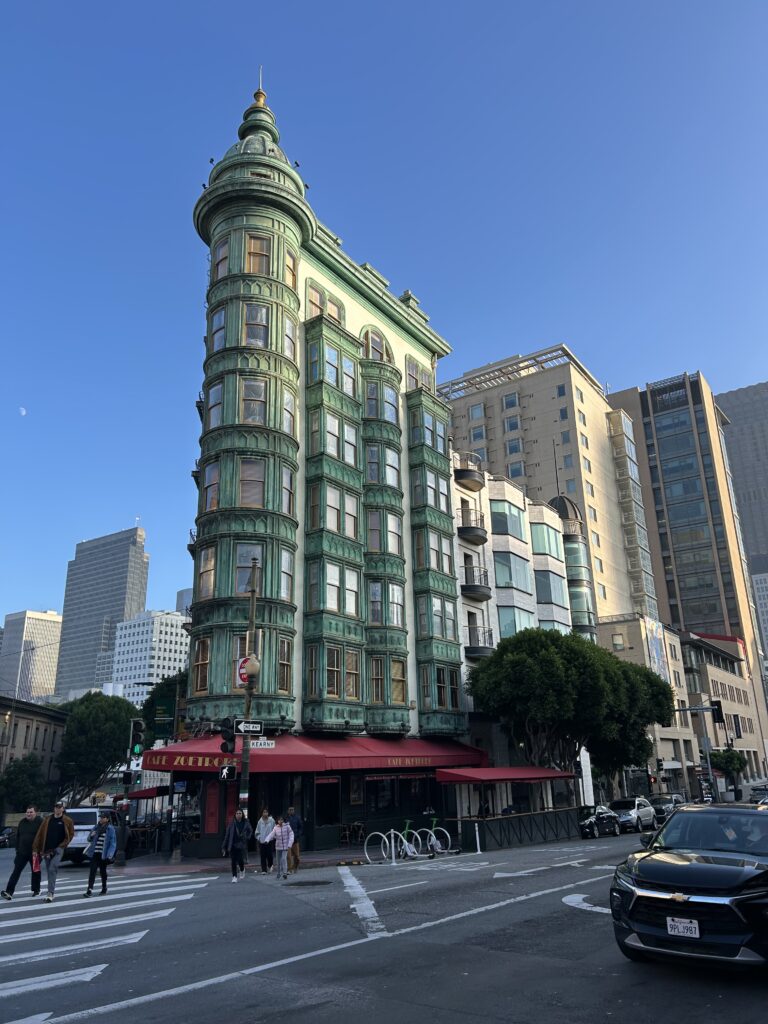
I came to San Francisco over a month ago, a city I never imagined would become part of my life. It was never a plan, a dream, or even a passing thought. Life brought me here the way grief often does—without asking, without warning.
After losing my husband, the house we shared in Arizona became too large, too quiet, too full of echoes. Every room held a memory, and the silence weighed heavier than the walls themselves. I did not come to San Francisco looking for answers. I came because I needed a different life, or at least the possibility of one.
2. Displacement and Awakening
Being here has unsettled me in ways I did not expect. This city does not let you look away. It places reality directly in your path—on sidewalks, at bus stops, in the air itself. The smell of drugs lingers on certain streets, sharp and unmistakable. Homelessness is not hidden; it is open and intertwined with daily life. People sleep where others stroll with coffee in hand. At first, it was jarring. Then it became impossible to ignore.
In Arizona, my life was quieter, more contained. Comfort insulated me. Suffering existed, of course, but at a distance—something seen in headlines, not encountered on the way to the grocery store. Here, suffering shares the same space and breathes the same air.
3. Seeing Lives I Rarely Saw Before
What I am learning, slowly and sometimes painfully, is how little I once understood about lives less privileged than my own. I see people whose daily concerns are not abstract or philosophical but immediate and physical: Where will I sleep tonight? Will I be safe? Can I find food? Can I make it through the day without being invisible—or worse, unwanted?
I watch small businesses open their doors every morning—family-run shops, tiny restaurants, and corner stores that survive on grit and long hours. Many of the owners know their customers by name. They work not for luxury but for survival, dignity, and pride. Their resilience humbles me. There is beauty in the care that goes into such a small space.
4. Learning to Move Differently
I now take the bus instead of driving. This change alone has transformed me. On the bus, I am not sealed off behind glass and metal. I sit among students, workers, the elderly, and the unhoused. I hear languages I do not speak and stories I will never fully know. There is a shared vulnerability in public transportation—everyone relies on the same system, is subject to the same delays, and endures the same crowded moments.
On the bus, grief does not make me special. It makes me human. I am one among many carrying invisible burdens. Mine is loss. Others carry poverty, addiction, illness, or displacement. No one’s pain cancels another’s; they coexist.
5. Grief as a Lens, Not a Wall
Losing my husband has stripped away the assumptions I once held about safety and permanence. In that stripping, I find myself more open—more able to see, feel, and notice. Grief has not made me stronger in the way people often say, but it has made me more aware. I notice suffering because I know what it means to hurt deeply and privately. I notice kindness because I know how desperately it can be needed.
This beautiful city, with all its contradictions, has become a teacher. It teaches me that comfort is not universal, that dignity can endure even without stability, and that life persists fiercely and unevenly, even in the harshest conditions.
6. A Quiet Reckoning
I do not romanticize hardship. There is nothing noble about addiction, homelessness, or hunger. Yet humanity is everywhere I look. People doing the best they can with what they have. People surviving in systems never built to protect them. Being here has forced me into a quiet reckoning with my own life—what I had, what I lost, and what I still have.
I came to San Francisco because I could not stay where I was. I did not expect to realize how much I had missed. Grief brought me here, but awareness keeps me here—for now. Perhaps that is part of rebuilding a life: not just finding new ground to stand on, but learning to truly see the ground beneath your feet and the people standing on it with you.